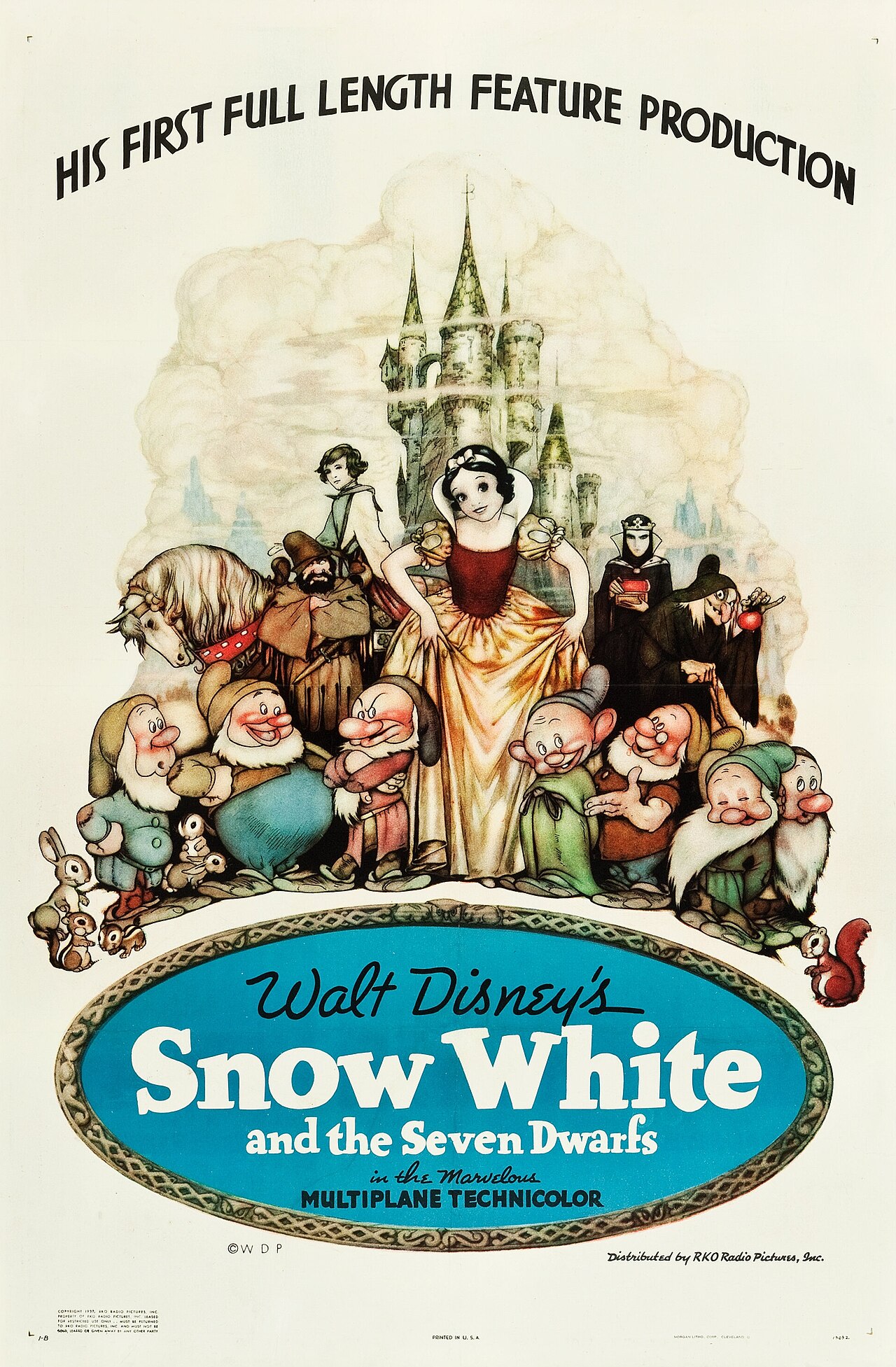
Snow White and the Seven Dwarfs (1937 film)
The first cel animated feature film, setting the standard for generations of animation to come.

Sam Hood · Public domain
The film was supervised by David Hand and a team of five sequence directors: Perce Pearce, William Cottrell, Larry Morey, Wilfred Jackson, and Ben Sharpsteen.
- director_supervisor
- David Hand
- production_company
- Walt Disney Productions
- distributor
- RKO Radio Pictures
- running_time
- Not specified in source
- budget
- $1.5 million
Lore & Background
He believed shorts did not bring enough profit for studio growth and saw a full-length film as a way to expand storytelling possibilities. After several proposed projects fell through, Disney settled on adapting the Brothers Grimm fairy tale.
Reader's Guide
Snow White and the Seven Dwarfs was a landmark release in the early animation industry, widely regarded as one of the greatest and most influential films ever made, credited with ushering in the golden age of animation. It was the highest-grossing animated film for 55 years.
Did You Know?
- Walt Disney was awarded an honorary Oscar for the film, consisting of one normal-sized and seven miniature statuettes, presented by Shirley Temple.
- Adjusted for inflation, its gross is often cited around $2.3 billion, though exact figures vary by methodology and other films are sometimes ranked higher.
Production & Creative Team
Snow White and the Seven Dwarfs stands as a pioneering achievement in American cinema, marking both the first animated feature film produced in the United States and the first cel animated feature film ever made. Walt Disney produced the project, which was distributed through RKO Radio Pictures. The film drew its narrative foundation from the 1812 German fairy tale "Snow White" authored by the Brothers Grimm, adapting the classic story into a musical fantasy format. Creative oversight fell to David Hand, who supervised the production alongside a team of five sequence directors: Perce Pearce, William Cottrell, Larry Morey, Wilfred Jackson, and Ben Sharpsteen. This collaborative structure represented a significant organizational undertaking for the animation industry at the time, as the team worked to bring a full-length animated narrative to life using the cel animation technique. The film's 1937 release represented a bold leap for the medium, establishing a new standard for what animated storytelling could achieve on the big screen.
Commercial Triumph & Box Office Legacy
The film's commercial performance defied widespread skepticism within the motion picture industry. It premiered at the Carthay Circle Theatre in Los Angeles on December 21, 1937, before entering general United States release on February 4, 1938. Against a production budget of $1.5 million, the film generated over $8 million in international earnings during its initial theatrical run, making it the highest-grossing film of 1938. It briefly held the distinction of the highest-grossing sound film of all time and maintained the title of the highest-grossing animated film for a span of 55 years. The film's enduring popularity prompted numerous theatrical re-releases that continued until its home video release in the 1990s. When adjusted for inflation, Snow White ranks among the top ten performers at the North American box office, with an adjusted gross of $2,297,000,000, and its worldwide inflation-adjusted earnings still lead the animation category.
Cultural Impact & Enduring Influence
Widely regarded as one of the greatest and most influential films ever made, Snow White is credited with ushering in the golden age of animation and establishing a landmark moment for the early animation industry. Disney's interpretation of the fairy tale has permeated popular culture across multiple decades and media. The film's legacy extends into theme park attractions, a video game, a Broadway musical, and a 2025 live-action film remake, demonstrating its continued relevance in the entertainment landscape. Institutional recognition has further cemented its status: in 1989, the United States Library of Congress deemed the film culturally, historically, or aesthetically significant and selected it as one of the inaugural 25 films for preservation in the National Film Registry. The American Film Institute included it among its list of 100 greatest American films and, in 2008, specifically named it the greatest American animated film of all time.
Academy Recognition & Honors
The film received notable recognition from the Academy of Motion Picture Arts and Sciences. In 1938, Snow White and the Seven Dwarfs earned a nomination for Best Musical Score at the Academy Awards, acknowledging the musical elements that defined its storytelling. The following year, producer Walt Disney was presented with a unique honorary Oscar specifically for the film. This particular award was unlike any other in Academy history, consisting of one full-sized statuette accompanied by seven miniature Oscar statuettes, a creative nod to the seven dwarfs at the heart of the story. The presentation of this distinctive award was made by Shirley Temple, one of the era's most beloved child stars. This singular recognition underscored the film's extraordinary impact on the industry and its place as a groundbreaking achievement that expanded the possibilities of animated cinema.
Gallery



Frequently Asked Questions
What role does Snow White play in the story?
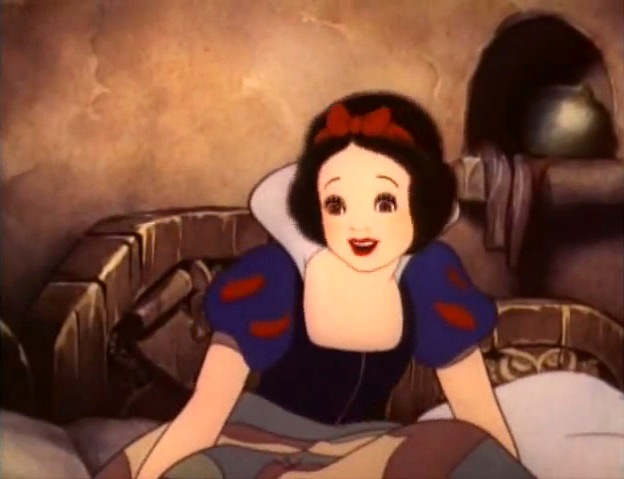
Snow White is the young princess who escapes her wicked stepmother, the Evil Queen, and takes shelter with seven mining dwarfs in their woodland cottage. She serves as the kind-hearted protagonist whose innocence and generosity drive the entire narrative forward.
How does Snow White and the Seven Dwarfs (1937 film)'s story end?
After the Evil Queen is defeated, a prince arrives and awakens Snow White from her enchanted sleep with a kiss. The tale closes with Snow White and the prince together while the dwarfs head back to their mining work.
Who directed Snow White and the Seven Dwarfs (1937 film)?
David Hand served as the supervising director, coordinating the efforts of five sequence directors: Perce Pearce, William Cottrell, Larry Morey, Wilfred Jackson, and Ben Sharpsteen. The project was produced under Walt Disney's banner at Walt Disney Productions.
More in Film History 1-16
Spotted an error? Know more?
This is a living reference — every entry is fact-audited, and reader corrections feed straight into our audit queue. Suggest an edit · See this site's audit record