Vertigo (film)

Paramount Pictures · Public domain
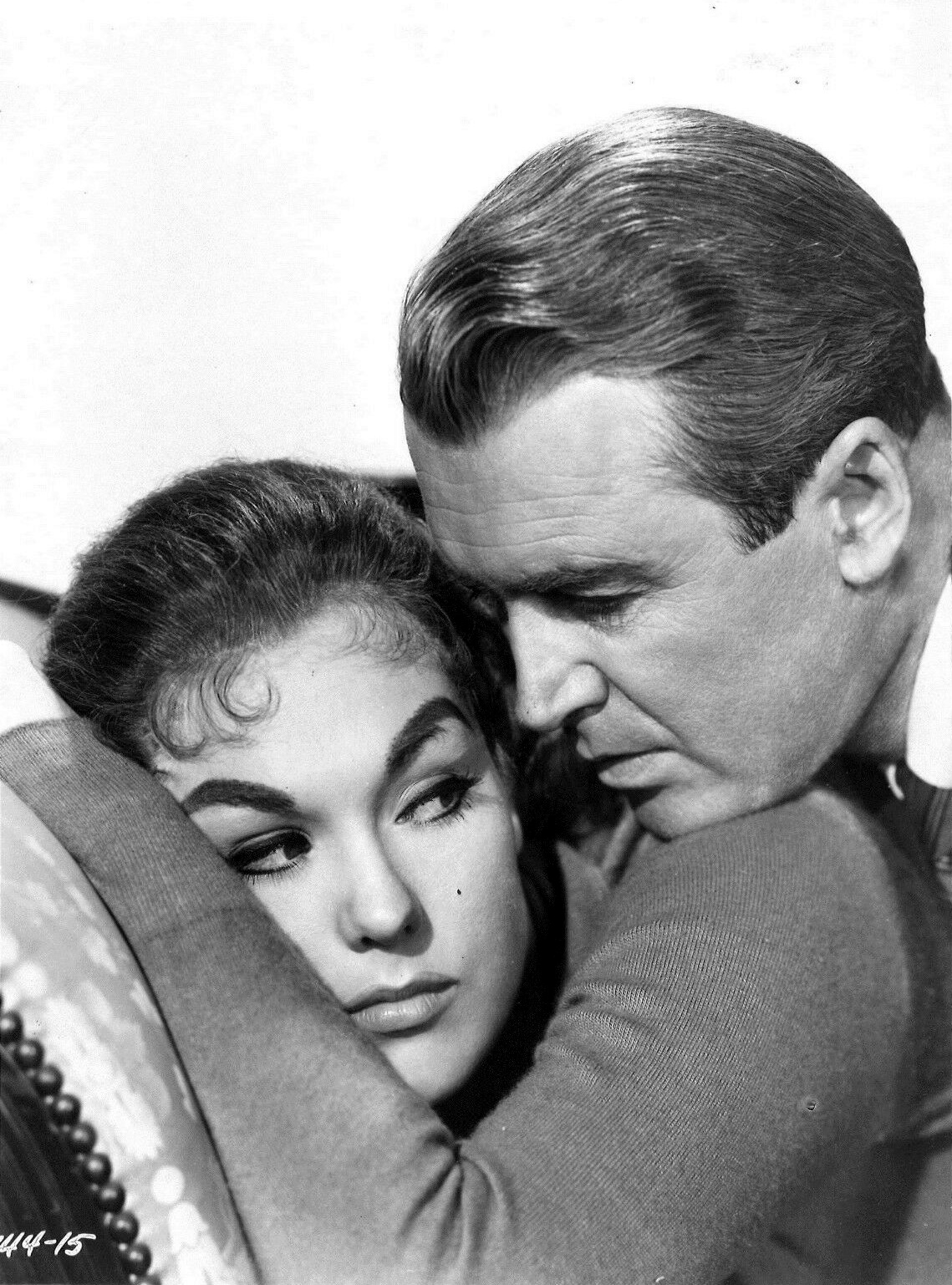
Taylor. The film stars James Stewart as a former San Francisco police detective who develops acrophobia and vertigo after an incident in the line of duty, and is hired to follow an acquaintance's wife (Kim Novak).
- Director
- Alfred Hitchcock
- Country
- United States
- Genre
- Psychological thriller
- Notable technique
- First film to use the dolly zoom (Vertigo effect)
Lore & Background
The film was shot on location in San Francisco, Mission San Juan Bautista, Big Basin Redwoods State Park, Cypress Point on 17-Mile Drive, and at Paramount Studios.
Reader's Guide
Vertigo received mixed reviews on release but has since come to be considered Hitchcock's magnum opus and one of the greatest films of all time. The film has attracted significant scholarly attention, with critics interpreting it as a tale of male aggression, a deconstruction of masculinity, and a study of psychological obsession.
Did You Know?
- Vertigo was the first film to use the dolly zoom, an in-camera effect that distorts perspective to convey Scottie's acrophobia.
- Alfred Hitchcock makes a cameo appearance walking in front of Gavin Elster's shipyard, carrying a trumpet case.
Founding & the Two-Film Mandate
Vertigo Films was established in London in July 2002 by two producers with distinct and complementary credits: Allan Niblo, known for his work on Human Traffic and South West 9, and James Richardson, who had produced Kiss Kiss (Bang Bang). The company was not conceived as a general-purpose studio; rather, it was created with a very specific and limited mandate—to produce and distribute exactly two films: The Football Factory and It's All Gone Pete Tong. Within a year of its founding, the team expanded in meaningful ways. Director Nick Love, who had previously written and directed Goodbye Charlie Bright and The Football Factory, joined the company, alongside distributor Rupert Preston, whose prior distribution credits included Chopper, Chasing Amy, and Bride of Chucky. In November 2004, entrepreneur Rob Morgan brought new investment capital into the venture, strengthening the company's financial footing as it prepared to move beyond its initial two-film mission.
Distribution Infrastructure & Strategic Alliances
Beyond its original two-film purpose, Vertigo Films built a broader operational infrastructure to support an expanding slate. Home video distribution of its film releases was handled by Entertainment One, giving the company access to established retail and rental channels. In January 2008, the company entered a notable joint venture, teaming up with Film4 and Ingenious Media to create Protagonist Pictures, a dedicated sales company designed to market their output to international buyers. Vertigo also maintained a post-production facility in Berlin called The Post Republic, indicating a European operational footprint that extended well beyond its London base. Over time, the company's structure evolved further: film distribution responsibilities were eventually transferred to a subsidiary called Vertigo Releasing, while the parent entity refocused its energy entirely on producing television series. This organizational split allowed each arm to specialize, with the production side concentrating on scripted screen content while the releasing arm handled the commercial logistics of getting films to audiences.
Festival Circuit & Industry Accolades
Vertigo Films' catalogue attracted a remarkable breadth of festival and industry recognition across multiple productions. It's All Gone Pete Tong alone collected the Best Canadian Feature at the 2004 Toronto International Film Festival, the Best Feature at the US Comedy Arts Festival in 2005, and five Leo Awards in 2005 spanning sound, editing, and best feature-length drama. Paul Kaye and Mike Wilmot each picked up acting honors at the US Comedy Arts Festival and the Canadian Comedy Awards respectively. London to Brighton earned Paul Andrew Williams the Golden Hitchcock at the Dinard Festival, a New Director's Award at Edinburgh, and the Evening Standard's Most Promising Newcomer in 2007. Gareth Edwards' Monsters swept the 2010 British Independent Film Awards with Best Director, Best Production Achievement, and a technical award for visual effects, while also earning a Saturn Award for Best International Film in 2011. Tom Hardy's Bronson took Best Actor at the 2009 BIFAs and Best Film at the Sydney Film Festival, cementing the company's reputation for championing distinctive talent.
Television Pivot & the Bulletproof Controversy
As Vertigo Films transitioned away from feature production, its television work became central to its identity. The company's first two series, Britannia and Bulletproof, were both commissioned by Sky and each earned a renewal for a second season, signaling strong network confidence in the production team's output. However, the Bulletproof franchise met a dramatic and abrupt end in May 2021. Sky cancelled the show following extensive allegations of on-set bullying and sexual misconduct directed at actor and executive producer Noel Clarke. The cancellation represented a significant reputational and operational setback, as Bulletproof had been one of the company's flagship television properties. This episode also underscored the broader industry reckoning with workplace conduct that was reshaping British television during that period. With the film distribution function already carved out to Vertigo Releasing, the parent company's sole remaining focus became the development and production of new television series, marking a definitive chapter in its evolution from a two-film startup into a dedicated screen-content producer.
Gallery

Frequently Asked Questions
What is the plot of Vertigo (1958)?
A former San Francisco police detective, now suffering from a debilitating fear of heights, is hired to surveil a woman and becomes entangled in a web of obsession and manipulation.
What is the 'Vertigo effect' or dolly zoom?
It is a camera technique that pairs a dolly movement with a simultaneous lens zoom to create a startling sense of spatial distortion. Vertigo was the first feature film to employ this effect.
Who are the lead actors in Vertigo (1958)?
James Stewart portrays the acrophobic ex-detective, while Kim Novak plays the mysterious woman he is assigned to follow.
More in Film History 1-16
Spotted an error? Know more?
This is a living reference — every entry is fact-audited, and reader corrections feed straight into our audit queue. Suggest an edit · See this site's audit record