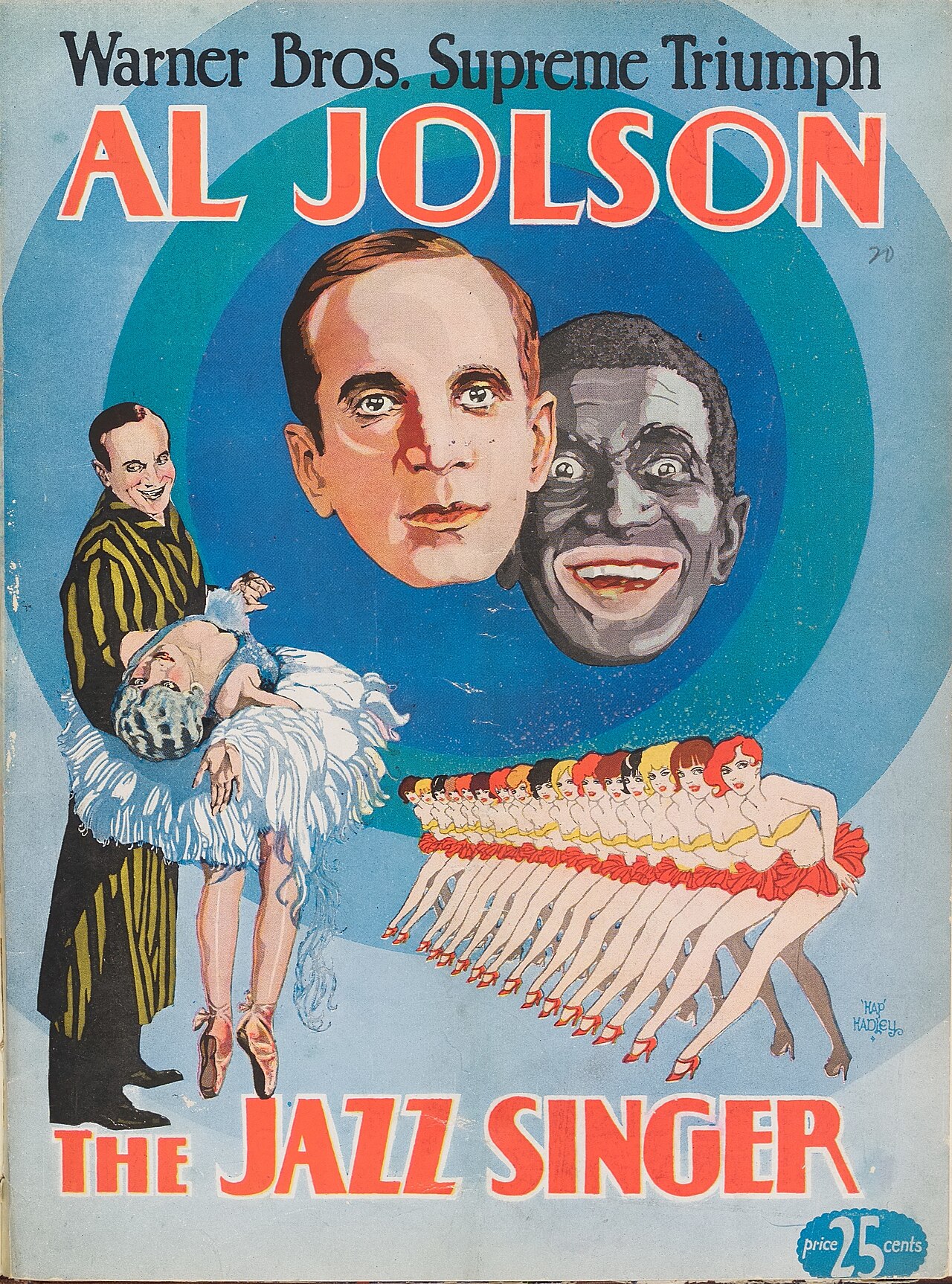
The Jazz Singer
First feature-length part-talkie with synchronized music and speech.

Hap Hadley (illustrator) Warner Bros. (producer) · Public domain
Pictures. It is the first feature-length motion picture with both synchronized recorded music and lip-synchronous singing and speech (in several isolated sequences). Its release heralded the commercial ascendance of sound films and effectively marked the end of the silent film era with the Vitaphone sound-on-disc system, featuring six songs performed by Al Jolson.
- director
- Alan Crosland
- producer
- Warner Bros. Pictures
- starring
- Al Jolson
- notable_for
- First feature-length motion picture with synchronized recorded music and lip-synchronous singing and speech
Lore & Background
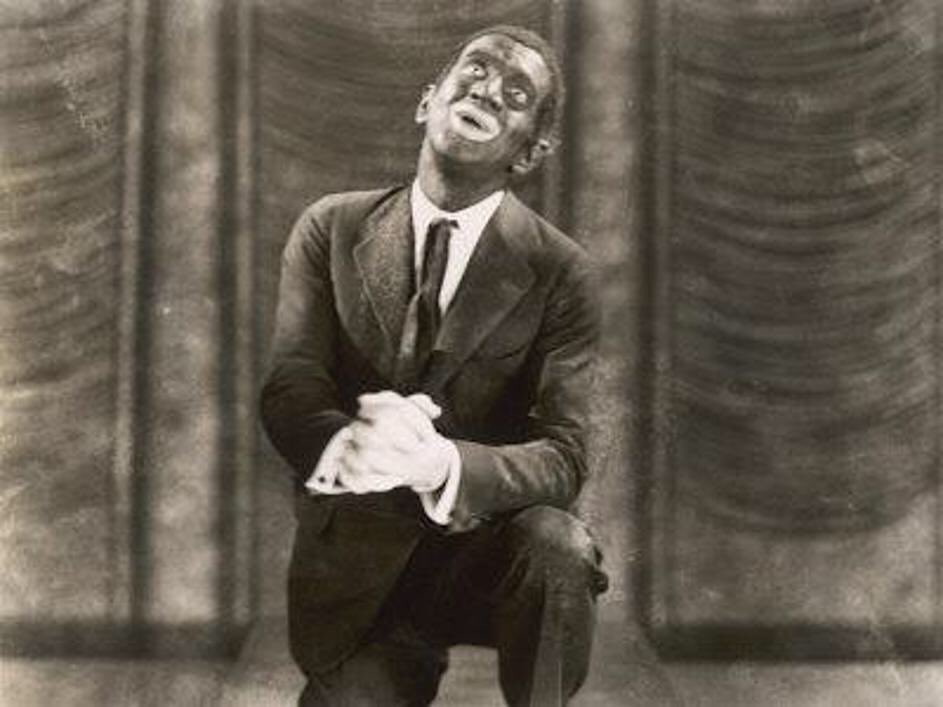
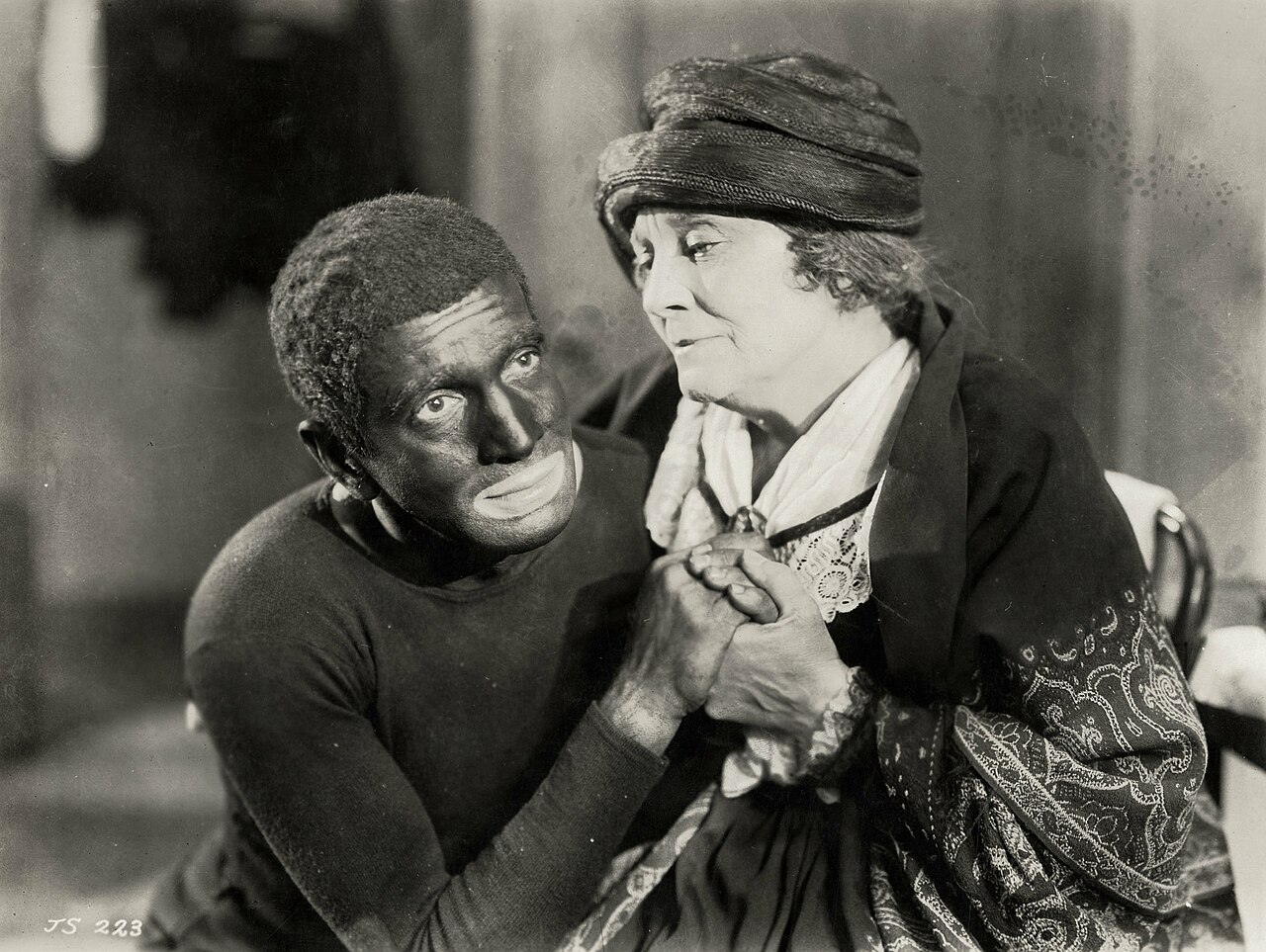
The film depicts the fictional story of Jakie Rabinowitz, a young man who defies the traditions of his devout Jewish family. After singing popular tunes in a beer garden, he is punished by his father, a hazzan (cantor), prompting Jakie to run away from home. Some years later, now calling himself Jack Robin, he has become a talented jazz singer, performing in blackface. He attempts to build a career as an entertainer, but his professional ambitions ultimately come into conflict with the demands of his home and heritage. Cantor Rabinowitz wants his 13-year-old son to carry on the family tradition and become a cantor, but Jakie prefers singing jazz. After a whipping, Jakie runs away. About ten years later, as Jack Robin, he gets a big break in a musical called April Follies. When his father falls gravely ill, Jack must choose between the show and singing the Kol Nidre for Yom Kippur in his father's place. He ultimately sings the Kol Nidre, reconciling with his father, who dies forgiving him. The film ends with Jack performing 'My Mammy' in blackface at the Winter Garden theater.
Reader's Guide
The Jazz Singer is historically significant as the first feature-length film to include synchronized recorded music and lip-synchronous singing and speech, marking the commercial ascendance of sound films and effectively ending the silent film era. Darryl F. Zanuck won an Academy Honorary Award for producing the film; Alfred A. Cohn was nominated for Best Writing (Adaptation) at the 1st Academy Awards.
Did You Know?
- The Jazz Singer is the first feature-length motion picture with both synchronized recorded music and lip-synchronous singing and speech.
- Darryl F. Zanuck won an Academy Honorary Award for producing the film.
Pioneering the Talkie Revolution
The Jazz Singer arrived in 1927 as a part-talkie musical drama that would reshape the entire motion picture industry. Directed by Alan Crosland and produced by Warner Bros. Pictures, it stands as the first feature-length film to incorporate synchronized recorded music alongside lip-synchronous singing and speech, even if those spoken sequences remained limited to isolated moments. The picture employed Warner's Vitaphone sound-on-disc technology, and its theatrical release is widely regarded as the moment the commercial dominance of silent cinema began its irreversible decline. The screenplay drew from Samson Raphaelson's 1925 stage play of the same name, which itself had been adapted from his earlier short story titled The Day of Atonement. Producer Darryl F. Zanuck received an Academy Honorary Award for his role in bringing the project to screen, cementing the film's status not merely as a cultural artifact but as a genuine industrial watershed that opened the doors for decades of sound filmmaking to come.
A Son Between Two Worlds
At the heart of the film lies the story of Jakie Rabinowitz, a thirteen-year-old boy in Manhattan's Lower East Side Jewish ghetto who rebels against his devout family's expectations. His father, a hazzan, demands he inherit the generations-old cantorial tradition, yet Jakie's true passion is performing jazz in a local beer garden. After a painful whipping and a tearful farewell to his mother Sara, the boy flees home. A decade later, he has reinvented himself as Jack Robin, a charismatic jazz entertainer who performs in blackface and lands a leading role in the Broadway musical April Follies. The narrative's emotional climax forces Jack to choose between his long-awaited opening night and singing the sacred Kol Nidre for Yom Kippur in his dying father's place. His mother's bittersweet acknowledgment that he now belongs to the wider world, paired with his father's final whispered forgiveness, frames a story about the painful yet ultimately reconciled tension between inherited faith and personal artistic destiny.
Jolson's Stage and the Musical Score
Al Jolson anchors the film as both young Jakie and the grown Jack Robin, delivering six songs that serve as the picture's primary musical engine. His cabaret numbers, including Dirty Hands, Dirty Face and Toot, Toot, Tootsie, showcase a high-energy, crowd-pleasing style that contrasts sharply with the solemn cantorial tradition his father represents. The blackface makeup he applies before each performance underscores the era's entertainment conventions and the character's deliberate distance from his Jewish identity. A pivotal musical moment arrives with Mother of Mine, I Still Have You, performed during a dress rehearsal that his mother Sara witnesses for the first time, triggering her emotional acceptance of his chosen path. Beyond Jolson's showtunes, the Kol Nidre functions as the film's spiritual counterpoint, a sacred melody bridging the jazz stage and the synagogue. The story closes with Jack appearing at the Winter Garden theater, opening for a production called Back Room, his mother seated in the front row alongside the elder Yudelson.
Enduring Recognition and the Public Domain
Decades after its 1927 release, The Jazz Singer has accumulated a remarkable record of institutional recognition. At the very first Academy Awards ceremony, Alfred A. Cohn received a nomination for Best Writing (Adaptation), while producer Darryl F. Zanuck was honored with an Academy Honorary Award for his contribution to the project. In 1996, the Library of Congress selected the film for inclusion in the United States National Film Registry, citing its standing as a work of cultural, historical, and aesthetic importance to the nation's cinematic heritage. Two years later, the American Film Institute's all-time ranking placed the picture at number ninety among the greatest American films ever made. Perhaps most practically, the film's copyright lapsed on January 1, 2023, when all U.S.-published works from 1927 entered the public domain. This transition means the picture is now freely available for study, screening, and creative reuse without licensing restrictions, ensuring that a landmark of early cinema remains accessible to scholars, filmmakers, and audiences worldwide.
Gallery

Frequently Asked Questions
Who stars in The Jazz Singer?
Al Jolson headlines the picture, delivering six songs across its runtime. His on-screen singing and speaking moments are what made the film a landmark in the shift from silent to sound cinema.
Is The Jazz Singer a full talkie?
No; it is classified as a part-talkie, meaning only select isolated sequences contain synchronized singing and speech. The remainder of the film plays out in the conventional silent-film style with a musical score.
More in Film History 1-16
Spotted an error? Know more?
This is a living reference — every entry is fact-audited, and reader corrections feed straight into our audit queue. Suggest an edit · See this site's audit record